Carbonite Backup Running Slowly: Causes and Fixes
Backup failures may result from interrupted connectivity, a sleeping computer, missing permissions, excluded files or an application warning. The most useful first step is to determine what the application is reporting.
Note the last successful backup time, whether the issue affects one file or every file, and whether anything changed on the computer recently.
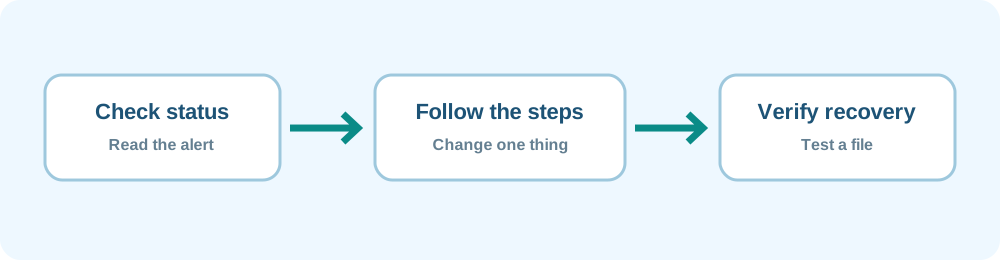
Before you begin
First, identify your Carbonite product edition and operating system. The names of controls and available features can differ by subscription and software version. Use the instructions below as a careful diagnostic checklist and compare each action with the controls available in your own application.
Write down the exact warning or error text if one appears. Keep a record of what you change so you can reverse a step if it does not help. If a procedure involves deleting, moving or overwriting data, make a separate copy first.
Step-by-step instructions
- Measure upload speed rather than download speed. Complete this action carefully, then observe whether the status, warning or available options change before moving on. If your version does not offer the named control, check the equivalent setting for your product edition instead of guessing.
- Check for simultaneous uploads. Complete this action carefully, then observe whether the status, warning or available options change before moving on. If your version does not offer the named control, check the equivalent setting for your product edition instead of guessing.
- Keep the computer awake. Complete this action carefully, then observe whether the status, warning or available options change before moving on. If your version does not offer the named control, check the equivalent setting for your product edition instead of guessing.
- Review file count and size. Complete this action carefully, then observe whether the status, warning or available options change before moving on. If your version does not offer the named control, check the equivalent setting for your product edition instead of guessing.
- Inspect any backup throttling or schedule settings supported by your edition. Complete this action carefully, then observe whether the status, warning or available options change before moving on. If your version does not offer the named control, check the equivalent setting for your product edition instead of guessing.
- Allow the first backup to complete.. Complete this action carefully, then observe whether the status, warning or available options change before moving on. If your version does not offer the named control, check the equivalent setting for your product edition instead of guessing.
How to check whether the issue is resolved
Where possible, repeat the check using a second representative file or a different session. A single successful screen load does not necessarily mean that an entire backup set is complete or recoverable.
Common reasons the first attempt may not work
There may be more than one contributing factor. A network issue can coincide with a paused backup; a file may be excluded even after a connection is restored; or the account you signed in to may not be the one associated with the original backup. Check the product status again after each change and avoid performing several destructive actions at once.
If the problem persists, note your operating system, product edition, approximate time of the last successful backup, and the exact wording of any message. Those details help distinguish a local configuration issue from an account, service or file-specific problem.
Important safety considerations
Never share account passwords, one-time verification codes, remote access permissions or full payment information through an unsolicited support interaction. For account-specific actions or product entitlements, confirm the process with the verified product provider.
Frequently asked questions
Can I use these steps on every Carbonite product?
No. Carbonite offerings and versions may differ in supported platforms, account screens, backup selections and recovery options. Apply only steps supported by your installed edition.
What if the problem continues after these steps?
Record the exact message and the last action that worked. Test a small, non-sensitive file if safe, and seek product-specific assistance rather than repeatedly reinstalling or deleting data.
How do I know my important files are safe?
Check the reported backup status and perform a small test restore into a separate location. Being able to open the recovered file provides stronger evidence than a status indicator alone.
Related Carbonite guides
- Carbonite Backup Not Working: A Step-by-Step Checklist
- Why Carbonite Backup Is Stuck or Not Progressing
- How to Resume a Paused Carbonite Backup
Need additional guidance?
Describe the issue and the troubleshooting steps you have already tried. This request goes to our independent assistance team.
Get SupportEditorial note: General troubleshooting information; interface names and features may vary. This article has not been verified against every Carbonite product edition.